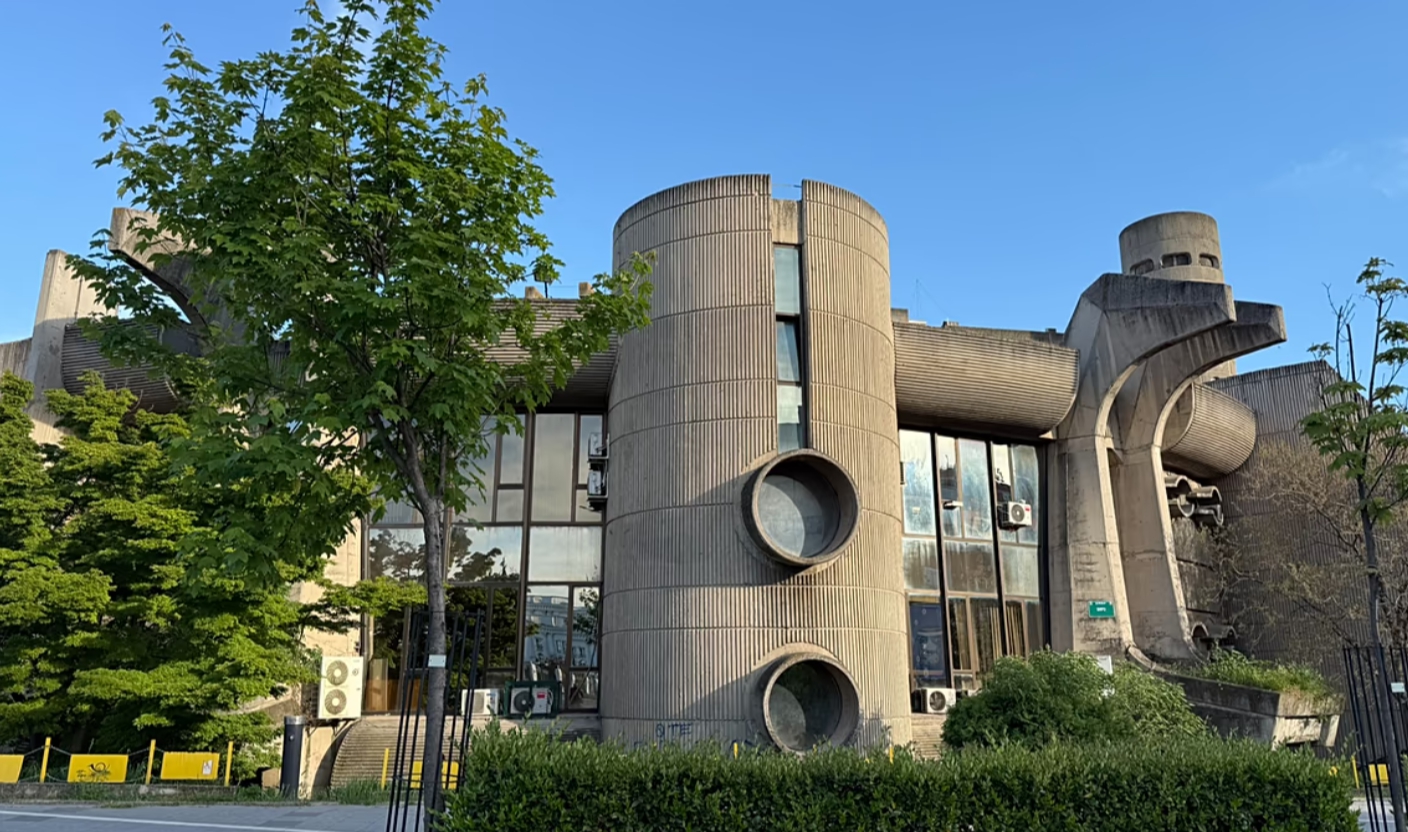

Most visitors come to Skopje for the Ottoman bazaar and the marble statues, and walk straight past the thing that makes architecture nerds book flights: some of the most extraordinary concrete buildings in Europe. After the 1963 earthquake flattened much of the city, Skopje was rebuilt as a showcase of post-war modernism, with a master plan led by Japanese architect Kenzō Tange and a generation of local architects let loose on concrete. Exploring Skopje brutalist architecture is like walking through a lost vision of the future — and it’s completely free.
How Skopje ended up like this
The 1963 quake killed over a thousand people and destroyed a huge share of the centre. What followed was a rare thing in city-building: an international effort, coordinated in part through the UN, to rebuild Skopje as a modern city. Tange won the competition for the central plan, and Macedonian architects designed the individual landmarks. The result is one of the densest collections of bold modernist and brutalist buildings anywhere, most of it going up between the late 1960s and early 1980s.The buildings to see
The Central Post Office and Telecom (PTT) – Janko Konstantinov
Start here. Konstantinov’s telecommunications complex, with its ribbed concrete cylinders and organic, almost creature-like forms, is the single most photographed piece of Skopje brutalist architecture. The main post office hall under its rotunda is the highlight — go inside if it’s open. It’s also a fragile monument that has appeared on European heritage watch-lists, which only adds to the sense that you’re seeing something that might not last.City Trade Centre (GTC)
A vast stepped shopping complex from the early 1970s, GTC is brutalism you can actually wander through – open terraces, concrete galleries, and light wells, still used exactly as intended. It sits right in the centre, so it’s an easy first or last stop.Macedonian Academy of Sciences and Arts (MANU)
Bare concrete facades, deep balconies and a heavy, deliberate presence near the river. MANU is a quieter, more restrained example than the Post Office, and worth a slow look.Skopje Train Station – Kenzō Tange
Tange’s own contribution: a long, elevated station on massive concrete piers, built over a decade and still in use. Walk the raised platforms to feel the scale of the original plan.University and student city – Marko Mušič and Georgi Konstantinovski
The Saints Cyril and Methodius University campus and the Goce Delchev student dormitories, with their rotating concrete towers and almost sculptural forms, are further from the centre but reward the detour if you’re properly into this.How to see them
Most of the key sights sit within a walkable stretch of the centre – the Post Office, GTC and MANU can be strung together on foot in an easy morning, with the train station a short ride away. Bring a wide lens; the concrete photographs best in flat or slightly overcast light, when the forms read clearly. These are working buildings, so be respectful about interiors and check whether halls are open before you go (verify). Local architecture-focused walking tours run in season if you want the full backstory.Keep exploring: the best places to visit in Skopje · our 3-day Skopje itinerary